Home Staging on the Peninsula: Why It Drives Top Offers
Does staging actually make a difference when selling a home on the Peninsula?
Yes, and the data backs it up. According to the National Association of REALTORS®, 81% of buyers' agents say staging makes it easier for buyers to visualize a property as their future home, and roughly 20% of sellers' agents report that staged homes receive offers 1% to 5% higher than comparable unstaged properties. On the Peninsula, where a 1% difference on a $2.5 million home is real money, staging isn't a luxury, it's a competitive decision.
Here's what I've seen over four decades of listing homes across San Carlos, Belmont, Redwood City, and Menlo Park: the homes that generate the most offers, and the best offers, are almost always the ones that looked unmistakably move-in ready from the first photo a buyer clicked on Zillow or Redfin.
That's not a coincidence. It's the result of intentional preparation.
Why Staging Matters More Than Ever in This Market
Recent Zillow market data shows the median sale price in San Carlos is $2,560,000, with homes sitting on the market a median of 49 days. Across the Peninsula, prices remain elevated and competition is real. When a buyer is evaluating homes at this price point, their expectations are high, and their decision window is short.
The comparison across Peninsula markets right now makes the stakes clear:
Area | Median Sale Price | Median Days on Market |
|---|---|---|
San Carlos | $2,560,000 | 49 |
Redwood City | $1,900,000 | 55 |
Belmont | $2,080,000 | 56 |
Menlo Park | $3,042,375 | 57 |
Half Moon Bay | $1,434,000 | 57 |
San Jose | $1,430,000 | 7 |
Woodside | $4,025,000 | 60 |
San Mateo | $1,770,000 | 49 |
Source: Zillow sales data, trailing ~90 days, as of August 2026. Area-level medians, individual home values vary by condition, street, build year, and timing.
A San Mateo County market snapshot from Realtor.com (updated spring 2026) puts the countywide median days on market around 38 days, with a sales-to-list ratio near 100%. That's a market where well-positioned listings move quickly, and where a home that sits starts to raise questions in buyers' minds.
Staging is one of the most direct tools for staying in the "short days-on-market" cohort. NAR's staging resource page notes that about one-third of respondents say staging can increase a home's value between 1% and 10% compared with similar unstaged homes. And NAR's 2025 "Staging to Sell" article describes a clear market shift toward buyers expecting picture-perfect presentation from the moment a listing goes live.
That shift is especially pronounced here. Peninsula buyers at the $2M-plus price point have high visual expectations, and they're often making decisions fast, sometimes before they've set foot in the home.
The online first impression is the first impression
Most buyers today start their search on Redfin or Zillow, and they're scrolling through listing photos before they ever schedule a showing. A 2026 Redfin explainer on staging summarizes research showing staged homes can sell significantly faster than vacant or unstaged listings, with offers typically running 1–5% higher per NAR data. Redfin also notes, accurately, that these impacts vary by location and buyer demand, which is exactly why the Peninsula's competitive baseline makes staging even more valuable, not less.
If your photos don't stop a buyer mid-scroll, they move on. Staging is what makes them stop.
Staging in a sellers' market still pays
I hear this question often: "The market is competitive anyway, do I really need to stage?" My answer is always yes, and here's why. Tight inventory doesn't mean buyers will accept anything. It means the best-presented home in a given price range gets the most offers. More offers means more leverage, and more leverage means a better outcome for you. Staging isn't just about selling, it's about selling at the number you deserve.
According to the Real Estate Staging Association's Q1 2025 industry statistics, staged homes in their sample averaged 12 days on market and a sale-to-list ratio of 107%. These are national industry figures from RESA's own sample, not a Bay Area guarantee, but the directional story is consistent with what I've watched play out on the Peninsula for years.
What to Stage, and How to Think About It
Not every room carries equal weight. The goal of staging is to help a buyer emotionally picture their life in the home, and that happens fastest in the rooms where people actually live.
Start with the rooms that sell the story
The entry and living room set the tone the moment a buyer walks in (or clicks through photos). The kitchen and dining area sell a lifestyle, entertaining, morning coffee, Sunday dinners. The primary suite is where buyers mentally "move in." These three zones consistently drive the emotional response that turns interest into an offer.
I tell sellers to think about staging as editing, not decorating. The goal isn't to fill a room, it's to show its best version. That often means removing as much as you add.
Vacant homes need furniture; occupied homes need focus
If the home will be vacant during the listing period, full furniture staging is almost always worth it. Empty rooms read smaller in photos and feel cold in person. Buyers struggle to scale the space, and that uncertainty works against you.
For occupied homes, the approach is different. Partial staging, bringing in art, accent furniture, and soft goods while you're still living there, can achieve a lot without a full move-out. Redfin's staging cost overview also notes that virtual staging is an option for condos and smaller units where keeping costs down is a priority, though nothing replaces physical staging for in-person showings.
The Peninsula staging aesthetic
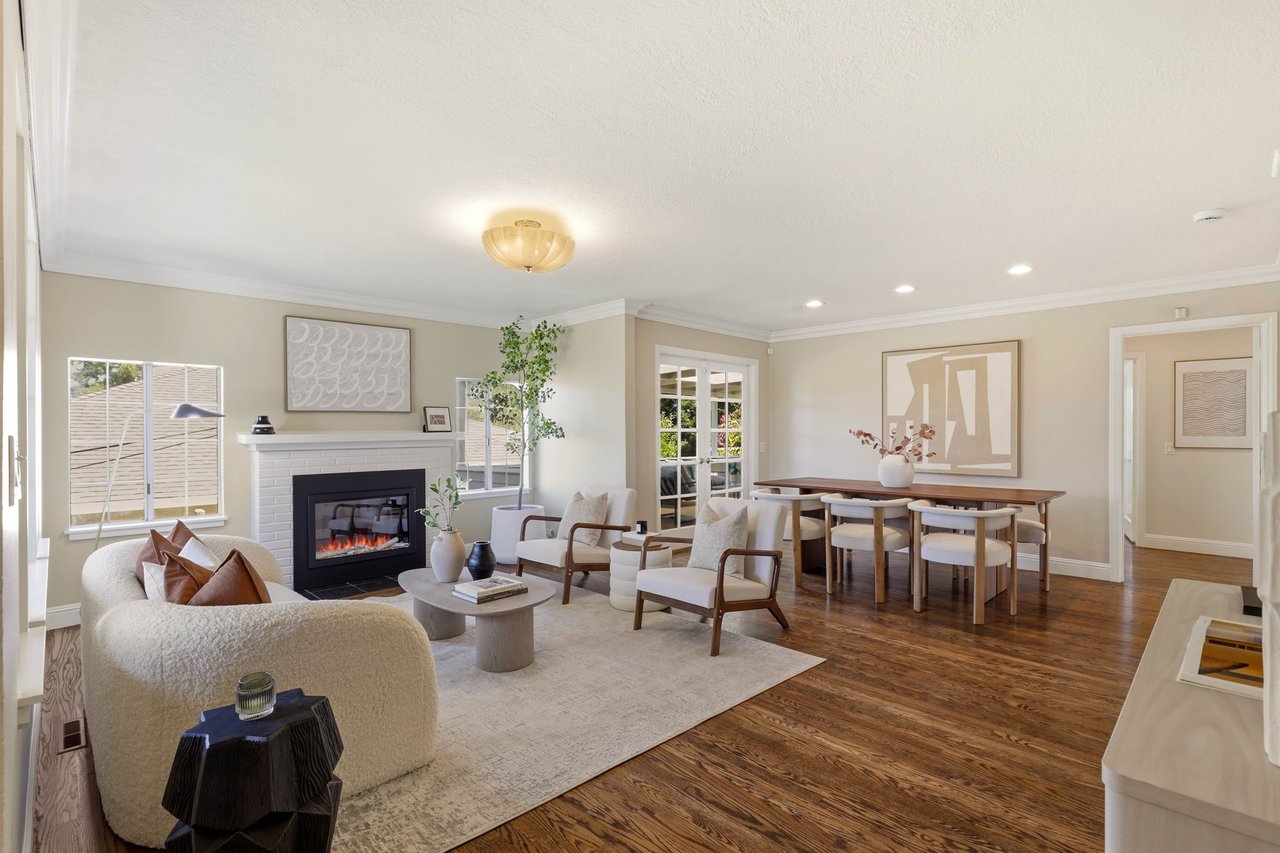
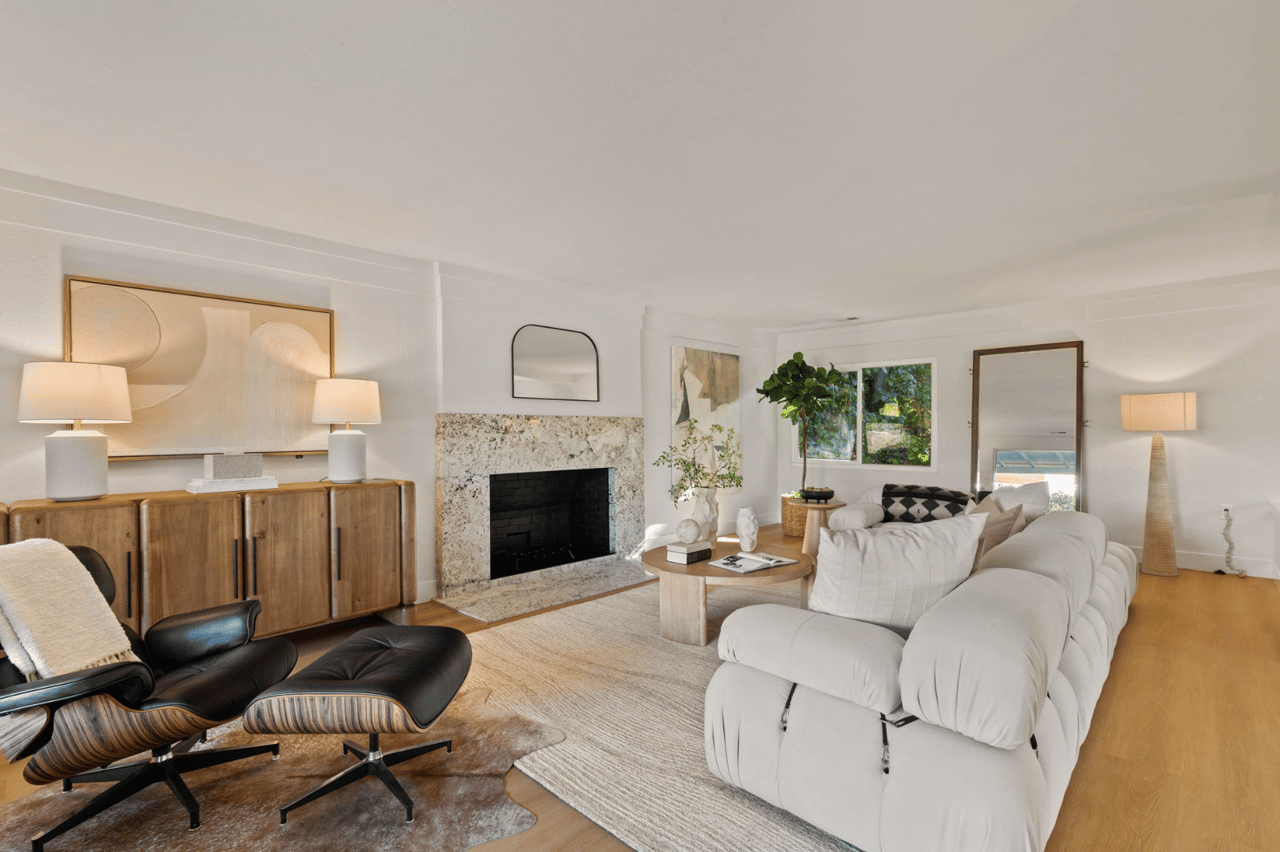
Bay Area staging firms describe a consistent local preference: modern, minimalist, or "California casual" aesthetics that photograph well and feel aspirational without feeling cold. Think clean lines, warm neutrals, and intentional light. XO Staging's Bay Area guide describes complete furniture packages with artwork and accessories tailored to this aesthetic, the kind of presentation that resonates with Peninsula buyers who are accustomed to well-designed spaces.
This is also a market where professional photography matters enormously. Staging and photography work together. Plan for photography within 24 to 48 hours of staging completion so the home is captured at its freshest.
Plan your timeline early
The typical Peninsula staging process runs like this: staging furniture and décor are installed over one to two days for a standard-size home, professional photography follows within 48 hours, and staging remains in place through the initial marketing window, usually three to six weeks. That timeline aligns well with the short days-on-market patterns we see in San Mateo and Santa Clara counties.
The key is scheduling. Good stagers on the Peninsula book out, especially heading into competitive listing windows. If you're thinking about listing, the staging conversation should happen well before you're ready to go live, not the week before.
Your specific staging strategy depends on your home's condition, layout, price point, and timeline. That's exactly the kind of conversation I have with every seller before we even talk about list price.
Frequently Asked Questions About Staging on the Peninsula
Is staging really necessary on the Peninsula, or will buyers come anyway because inventory is tight?
Tight inventory means buyers will come, but it doesn't mean they'll offer what you're hoping for. The best-presented home in a price range consistently attracts the most offers and the strongest terms. NAR's staging research shows roughly 48% of sellers' agents say staging decreases time on market, and about 20% report it increases the dollar value offered. In a market where median sale prices run $1.4M to over $4M depending on the area, that difference is meaningful.
What parts of my Peninsula home should I prioritize for staging?
Focus on the entry, living room, kitchen and dining area, and primary suite. These are the rooms where buyers form their emotional connection to a home, both in person and in listing photos. Secondary bedrooms and bathrooms matter too, but if you're working with a limited scope, the main living spaces and primary suite drive the most impact.
Does staging still matter in a sellers' market?
Absolutely. Staging in a competitive market isn't about attracting buyers, it's about maximizing the offers you receive. A well-staged home in a multiple-offer situation gives buyers a clear, compelling vision of the property, which tends to produce stronger bids and cleaner terms. The goal is always to get the best outcome, not just any outcome.
Are Bay Area buyers looking for full furniture staging, or will light decluttering be enough?
It depends on whether the home is vacant or occupied, and on the price point. Vacant homes almost always benefit from full furniture staging, empty rooms photograph poorly and feel smaller in person. For occupied homes, targeted decluttering, editing, and partial staging with accent pieces can be very effective. At the $2M-plus price points common on the Peninsula, buyer expectations for presentation are high, and that's worth factoring into your staging scope.
How long before listing should I schedule staging in San Mateo or Palo Alto?
Start the conversation at least three to four weeks before your target list date. Quality stagers on the Peninsula book out, and you'll want time to coordinate any pre-listing repairs or touch-ups before staging goes in. Plan for staging installation one to two days before photography, and photography 24 to 48 hours after staging is complete. Rushing this process is one of the most common mistakes I see sellers make, it shows in the photos, and photos drive showings.
Staging is one of the most direct levers you have over your home's market performance. On the Peninsula, where the gap between a good offer and a great offer can be six figures, it's not a step to skip.
With more than 40 years of listing homes across San Carlos, Belmont, Redwood City, Menlo Park, and the broader Peninsula, I've watched thoughtful staging consistently drive more top offers than almost anything else a seller can do before going live. It's one of the first things I walk my clients through, and it shapes everything that follows.
When you're ready to talk through your home's specific situation, I'm here. Call me at 650-595-5500 or reach out through my contact page for a confidential, no-pressure conversation about what it takes to get your home market-ready on the Peninsula.
Equal Housing Opportunity. Alex Lehr, CA DRE# 00867442, Guide Real Estate CA. This article is general information only and does not constitute legal, tax, or financial advice. Verify your specific numbers and circumstances with your attorney, tax advisor, lender, or escrow officer. Contact/text consent disclosure: message and data rates may apply.