Does home staging really increase sale price on the Peninsula?
Yes, and the evidence is consistent. According to NAR's 2025 Profile of Home Staging, 29% of sellers' agents reported that staging led to a 1% to 10% increase in the dollar value offered, and 49% said it reduced time on market. On the Peninsula, where the median sale price in San Carlos recently reached $2,560,000, even a modest perceived-value lift translates into real money, and fewer days sitting on market means less negotiating leverage for buyers.
I've been selling homes on the Peninsula since 1984, and I'll tell you this directly: thoughtful staging drives more top offers than almost anything else you can do to a home before it hits the market. Not because it fools anyone, but because it helps buyers see themselves living there, and that emotional connection is what turns interest into competitive offers.
What staging actually does for your listing
Staging isn't decorating. It's a deliberate strategy to remove friction between a buyer and a purchase decision.
When a buyer walks into a well-staged home, they stop calculating what they'd have to fix or replace and start imagining where they'd put their furniture. That mental shift is worth more than any price reduction you could offer. A price cut signals distress. A beautifully staged home signals confidence.
The rooms that move the needle most
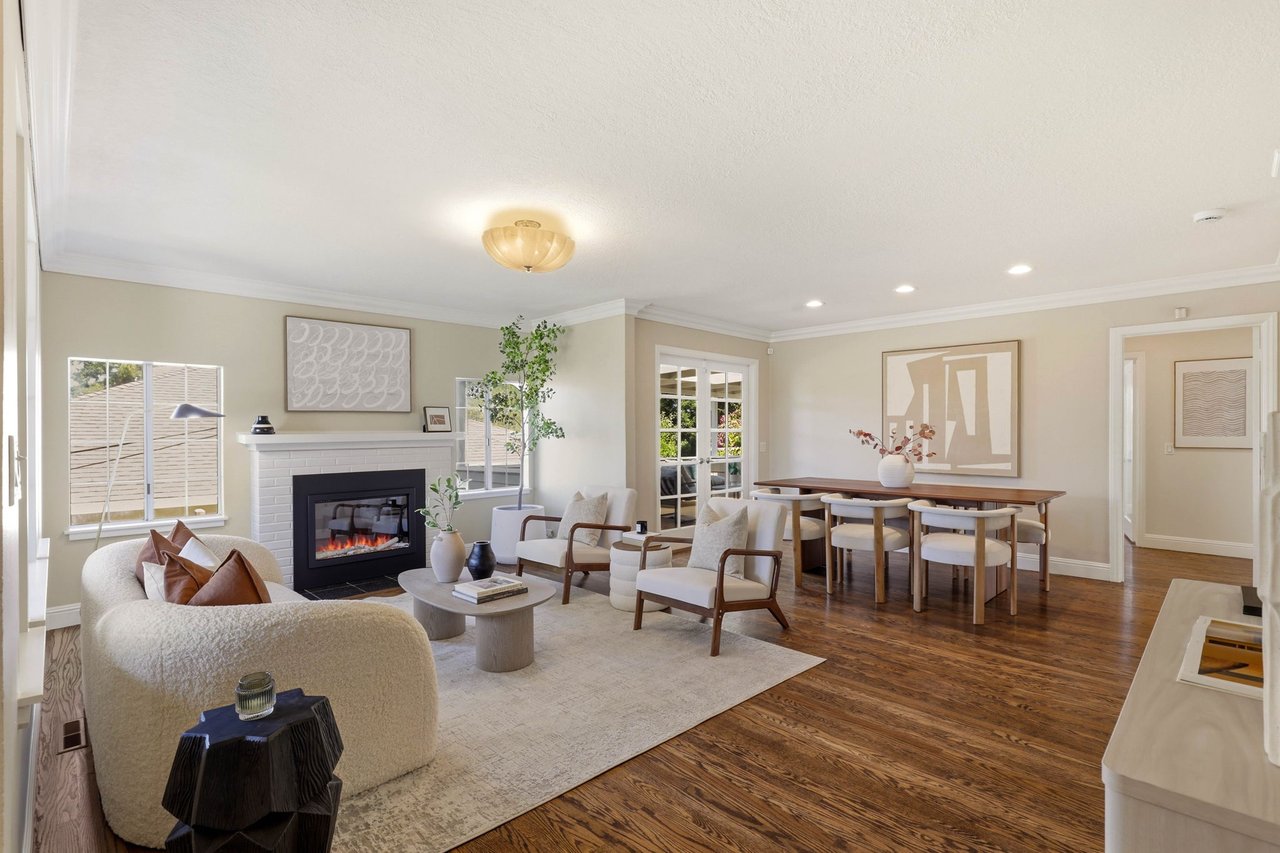
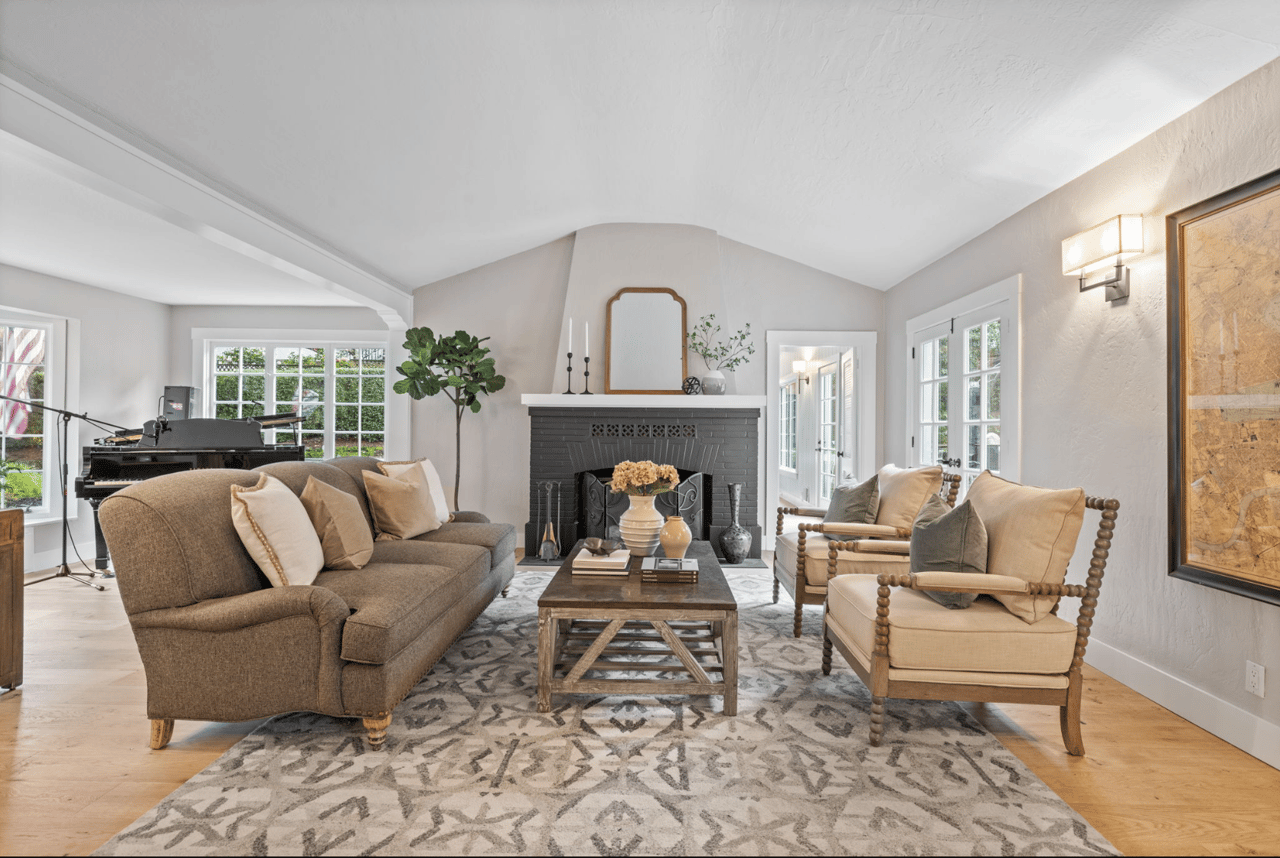
Not every room needs the same investment. NAR's staging research is clear on where to focus: the living room is the most important room to stage, followed by the primary bedroom, then the kitchen. Those are the spaces buyers photograph, linger in during showings, and reference when they're debating between two homes at the kitchen table that night.
Sellers' agents most commonly staged the living room, primary bedroom, kitchen, and dining room. The home office and children's bedrooms were staged far less often. That's a useful framework: concentrate your effort and budget where buyers concentrate their attention.
Staged versus vacant: a critical distinction
A vacant home creates a specific problem: buyers struggle to scale rooms, and empty spaces tend to look smaller than furnished ones. They also feel cold and transactional rather than livable. If you've already moved out, staging isn't optional, it's essential. Furniture and art give buyers a spatial reference point and an emotional anchor.
An occupied home presents a different challenge. Here the goal is editing, not adding. Removing personal photos, clearing countertops, and replacing dated or heavy furniture with lighter, more neutral pieces helps buyers project their own lives into the space rather than feeling like guests in yours.
Your specific situation, vacant, occupied, or somewhere in between, shapes the right staging approach. That's a conversation worth having before you commit to a strategy.
What buyers' agents are seeing
It's not just sellers' agents who report a staging advantage. According to the same NAR 2025 Profile of Home Staging, 17% of buyers' agents said staging produced a 1% to 5% increase in the dollar value their clients offered compared with similar unstaged homes. That means the buyers themselves, not just the sellers, are responding to staging with higher numbers. On a $2.5M home, a 1% difference is $25,000. That's not a rounding error.
How staging plays out in today's Peninsula market
Recent Zillow market data shows the Peninsula is active but not frenzied. San Carlos is sitting at a median of $2,560,000 with a median of 50 days on market. Across the region, inventory is measured and buyers are selective. That selectivity is exactly why staging matters more, not less, in this environment.
When buyers have options and time to think, presentation becomes a differentiator. A home that photographs beautifully, shows cleanly, and feels move-in ready commands attention in a way that an unstaged home simply doesn't, regardless of how competitive the underlying market is.
Here's a look at where the market stands across the areas I serve:
Area | Median Sale Price | Median Days on Market |
|---|---|---|
San Carlos | $2,560,000 | 50 |
Redwood City | $1,905,000 | 57 |
Belmont | $2,125,000 | 57 |
Menlo Park | $3,150,000 | 54 |
Half Moon Bay | $1,475,000 | 53 |
San Jose | $1,430,000 | 8 |
Woodside | $4,050,000 | 54 |
San Mateo | $1,720,000 | 47 |
Source: Zillow sales data, trailing ~90 days, as of August 2026. Area-level medians, individual home values vary by condition, street, build year, and timing.
Across every one of these markets, the homes that generate multiple offers and sell at or above list price share a common thread: they were prepared. Staging is a central part of that preparation, and it's one of the highest-return investments a seller can make before going to market.
Every home and every situation is different, though. The right staging scope depends on your property's condition, price point, and how buyers in your specific neighborhood are responding right now. That's where a local market analysis and a frank conversation about your goals makes all the difference.
Frequently Asked Questions
Does home staging really increase sale price in the Bay Area?
The evidence points strongly in that direction. NAR's 2025 Profile of Home Staging found that 29% of sellers' agents reported a 1% to 10% increase in the dollar value offered on staged homes, and 17% of buyers' agents said their clients offered more for staged homes than for comparable unstaged ones. At Peninsula price points, those percentages represent significant dollar amounts. No staging outcome is guaranteed, but the data consistently favors sellers who invest in presentation.
Which rooms should be staged first when selling a Peninsula home?
Start with the living room, primary bedroom, and kitchen. NAR's staging research identifies these as the spaces buyers weigh most heavily, and they're the rooms that dominate listing photos and first impressions during showings. The dining room is also worth attention. Home offices and children's bedrooms are lower priorities unless they're a notable feature of your specific property.
How much time does staging save on market in a competitive area?
NAR's 2025 report found that 49% of sellers' agents said staging reduced time on market. In a market like the Peninsula, where recent data shows median days on market ranging from roughly 47 to 57 days across most areas, a faster sale isn't just convenient, it reduces carrying costs and limits the window for buyers to negotiate from a position of strength. Fewer days on market generally means less price pressure.
Is professional staging worth it for condos in San Mateo County?
Yes, often more so than for single-family homes. Condo buyers are frequently comparing multiple units in the same building or complex, and the differences between listings come down almost entirely to condition and presentation. A well-staged condo photographs better, shows better, and gives buyers a clearer sense of livability in a space where square footage is limited. The investment is typically smaller than staging a larger home, and the competitive impact is proportionally significant.
Should I stage a vacant house differently than an occupied one?
Absolutely. A vacant home needs furniture and decor to give buyers spatial context, empty rooms read as smaller and less inviting than furnished ones. An occupied home requires a different approach: editing, depersonalizing, and replacing heavy or dated pieces with lighter, more neutral options. Both strategies serve the same goal, helping buyers picture their own lives in the space, but the execution is very different. The right approach for your home depends on its current condition and how it shows, which is worth walking through with your agent before you commit to anything.
The bottom line on staging
Staging is not a luxury add-on. On a Peninsula home priced in the millions, it's one of the most defensible pre-market investments you can make. The data supports it, the buyer psychology supports it, and four decades of watching homes sell on this Peninsula supports it.
When I take on a listing, staging is part of the conversation from day one, not an afterthought. I work with sellers to identify exactly where to focus, what to address, and how to position the home so that the first buyer through the door feels the pull. That process is what turns showings into offers and offers into the number you actually want.
With more than 40 years of experience and over 3,100 homes sold across the Peninsula, I bring the kind of calm, proven guidance that makes even a complex sale feel manageable. If you're thinking about selling in San Carlos, Belmont, Redwood City, Menlo Park, or anywhere across San Mateo County, let's talk about what your home needs to compete at the top of its range. Call me at 650-595-5500 or reach out at guiderealestateca.com/contact for a confidential, no-pressure conversation.
Equal Housing Opportunity. Alex Lehr, CA DRE# 00867442, Guide Real Estate CA. This article is general information only and does not constitute legal, tax, or financial advice, confirm your specific numbers and circumstances with your attorney, tax advisor, lender, or escrow officer. California Department of Real Estate.