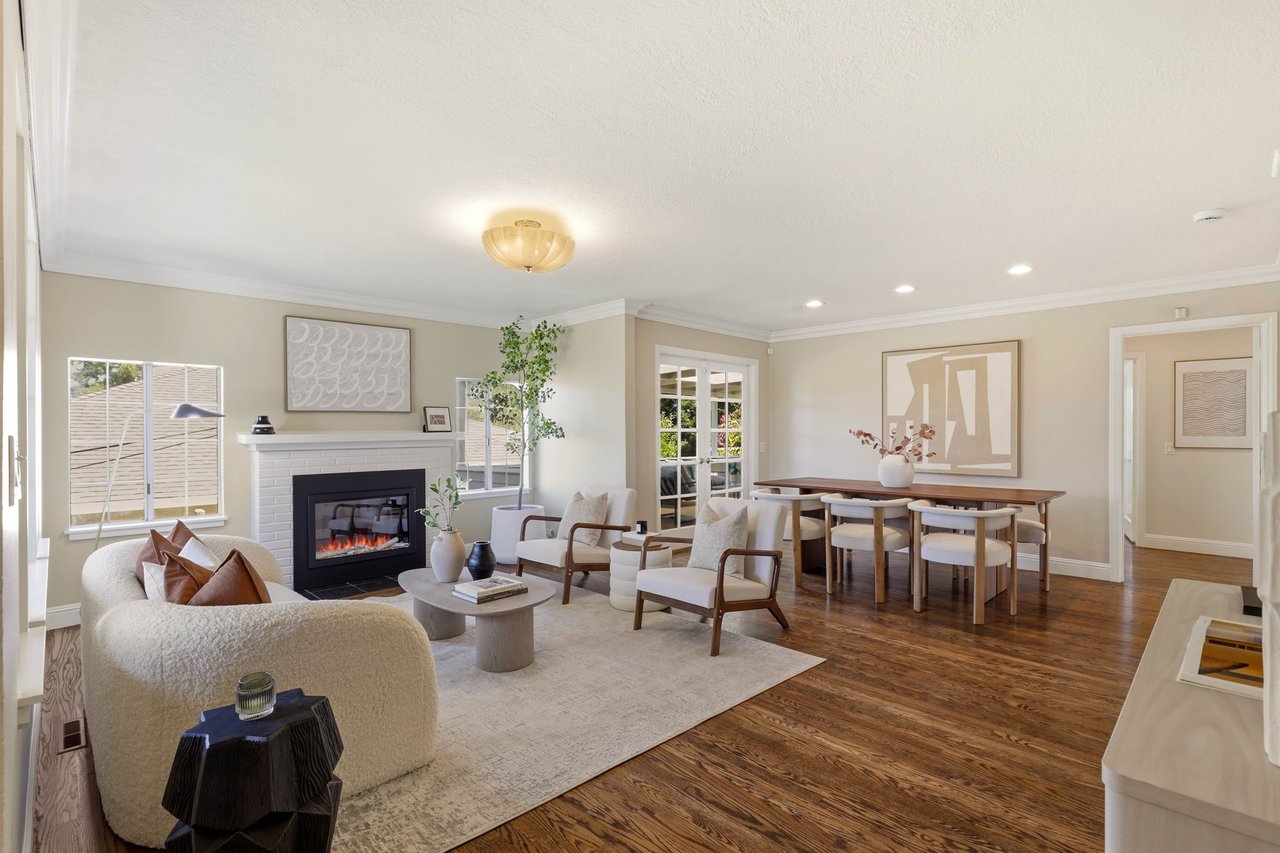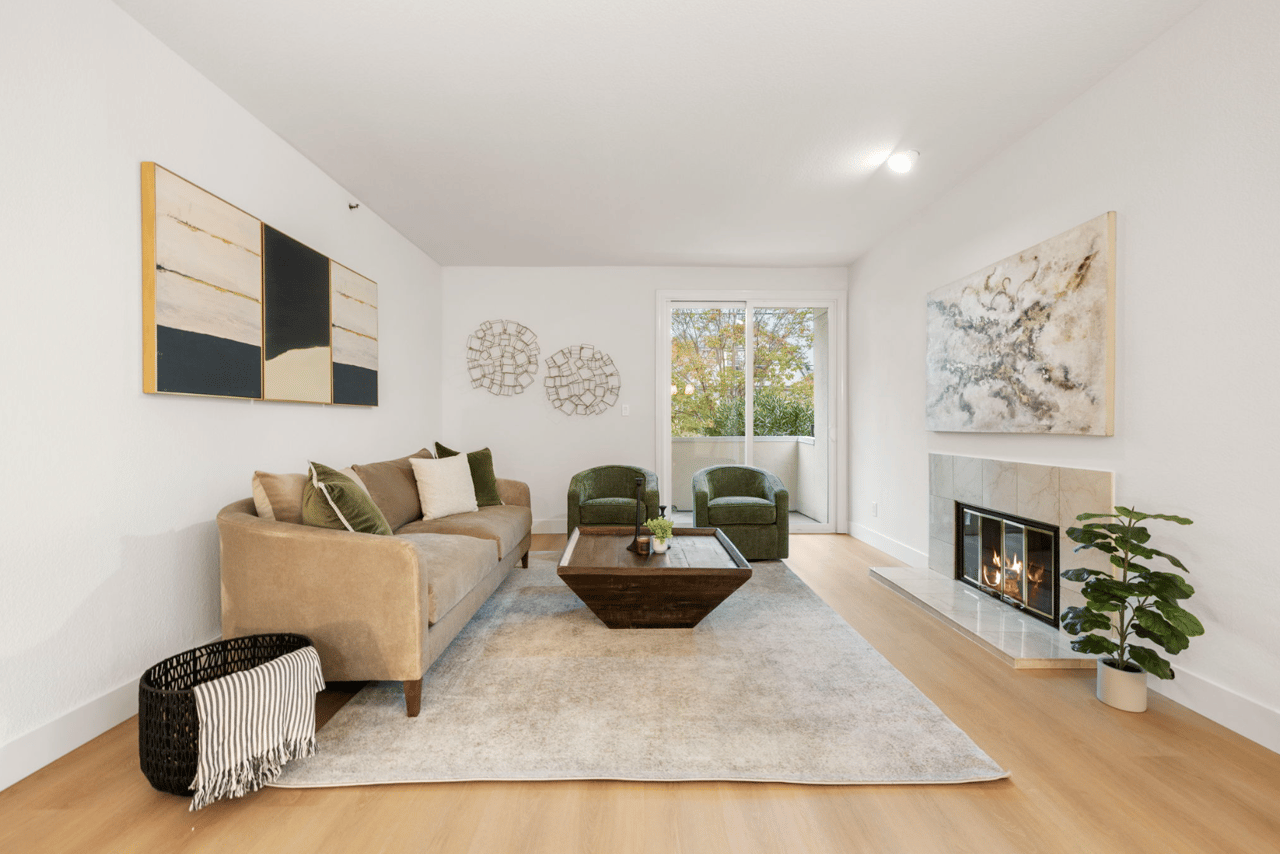
How do you stage a house to sell in San Francisco and on the Peninsula?
Staging a home for the Peninsula market means scaling furniture to the room, maximizing natural light, decluttering aggressively, and making your listing photos look as good as the home feels in person. According to the NAR 2025 Profile of Home Staging, 83% of buyers' agents say staging makes it easier for buyers to visualize a property as their future home, and in a market where most Peninsula single-family homes go under contract within two weeks, that visualization advantage can be the difference between one offer and five.
Why Staging Matters More on the Peninsula Than Almost Anywhere Else
The Peninsula is not a slow, deliberate market. According to MLSListings data as of August 2026, the median days on market for San Mateo County single-family homes is 13 days, with 367 homes sold in the prior month alone. That pace means most of the buyer activity on your listing, the online views, the showing requests, the offer conversations, happens in a concentrated first week.
If your photos are dark, your rooms feel cramped, or the entry looks tired, buyers move on. They have other options and limited time. Staging removes the friction that makes buyers hesitate.
The national data backs this up. The NAR 2025 staging press release found that 29% of agents reported staged homes received a 1–10% increase in the dollar value offered compared to similar unstaged homes, and 49% of listing agents observed either a slight or significant reduction in time on market when homes were staged. These are national figures, not Peninsula-specific, but they reflect a pattern I've watched play out on this market for more than 40 years.
The Real Estate Staging Association (RESA) tracked 129 staged homes in Q3 2025 and found an average sale-to-list ratio of 109% and average days on market of 19. Again, national data, but the direction is consistent: staged homes sell faster and closer to (or above) list price.
Here's what that means in concrete terms for this market. Recent Zillow market data shows San Carlos at a median sale price of $2,560,000 with a median of 49 days on market. Across the broader Peninsula, prices and timelines vary, but the stakes of a slow start are high everywhere.
Area | Median Sale Price | Median Days on Market |
|---|---|---|
San Carlos | $2,560,000 | 49 |
Redwood City | $1,900,000 | 55 |
Belmont | $2,102,500 | 56 |
Menlo Park | $3,042,375 | 56 |
Half Moon Bay | $1,434,000 | 56 |
San Jose | $1,435,000 | 8 |
Woodside | $4,050,000 | 62 |
San Mateo | $1,770,000 | 48 |
Source: Zillow sales data, trailing approximately 90 days, as of August 2026. Area-level medians, individual home values vary by condition, street, and timing.
At these price points, thoughtful staging drives more top offers than almost anything else you can do to a home before it hits the market. I've seen it shift outcomes from a single hesitant offer to a competitive situation with multiple bids, and the difference in net proceeds can be substantial.
The High-ROI Staging Moves for Peninsula Homes
Start with the three rooms that buyers actually remember
The NAR staging profile identifies the most commonly staged rooms nationally as the living room (91%), primary bedroom (83%), and dining room (69%). On the Peninsula, these are also the rooms that dominate your listing photo carousel, which means they're the rooms that determine whether a buyer books a showing or keeps scrolling.
Invest your staging budget here first. Everything else is secondary.
Scale your furniture to the room, not the other way around
Many Peninsula homes were built in the 1950s through 1970s, ranch-style and split-level layouts with lower ceilings, compact living rooms, and modest square footage in the common areas. When you put a deep sectional or a heavy dining table in one of these rooms, the space photographs small and feels claustrophobic during showings.
The fix is right-sizing. In a smaller San Francisco or Peninsula living room, a slimmer sofa, armless or low-arm chairs, and a glass or acrylic coffee table preserve sightlines and let buyers see the floor plan clearly in photos. In the dining room, a round table almost always reads better than a rectangular one in a tight space, it softens the room and suggests flexibility.
For ranch homes with a living-dining-yard flow, arrange furniture to emphasize that connection. Indoor-outdoor living is a genuine value driver in the Bay Area climate, and staging that guides a buyer's eye toward the yard or patio reinforces the lifestyle the home offers.
Fix the light before the photographer arrives
Peninsula homes have varied light exposure, foggy western neighborhoods, tree-shaded lots, bright south-facing rooms with Bay views. Light directly affects how your home photographs, and photos drive showings.
In lower-light rooms, use lighter textiles and rugs to prevent photos from reading as heavy or dark. Add layered lighting: overhead fixtures, floor lamps, and table lamps together create an even, warm look that photographs well even in older homes where built-in lighting is minimal. In bright, view-facing rooms, keep window treatments minimal and choose low-profile furniture that doesn't compete with what's outside the glass.
Schedule your listing photos for the time of day when your home's best rooms are at their brightest. This sounds obvious, but it's one of the most commonly skipped steps I see, and it costs sellers showings they never knew they lost.
Declutter to a level that feels almost uncomfortable
In my experience working with Peninsula sellers, the single most underestimated staging step is decluttering. Most people stop when the home looks "clean." The right level is when it looks like a model, surfaces clear, closets organized and half-empty, countertops showing only one or two intentional objects.
For families who've lived in a home for a decade or more (which is common on the Peninsula), this usually means a serious pass through the garage, sheds, bonus rooms, and built-in storage. Buyers open every door. A packed garage signals that the house doesn't have enough storage; an organized one signals the opposite.
In San Francisco condos and TICs, the focus shifts to visible overflow, items on top of cabinets, packed open shelving, countertop appliances that crowd small kitchens. Strip it back so the finishes are what buyers see, not the belongings.
The NAR staging data confirms that staging, much of which is organized decluttering plus neutral décor, is what helps buyers visualize the home as theirs. That visualization is what drives offers, not just showings.
Curb appeal: different rules for SF versus the Peninsula
In dense San Francisco neighborhoods, the Marina, Pacific Heights, Noe Valley, your front setback may be a single stoop and a small planter zone. You can't add a garden, but you can control paint condition, front door color, exterior hardware, entry lighting, and cleanliness. Garage doors at street level, stair railings, and exterior light fixtures are what buyers see in the listing's exterior photo, and they're what signals whether the home has been cared for.
On the Peninsula, you typically have more to work with. Fresh mulch and simple, low-maintenance plantings read better than elaborate gardens, buyers don't want to inherit a project. Clear house numbers, a well-lit entry, and a clean driveway matter more than most sellers expect, especially for evening showings when buyers are driving neighborhoods after work.
Both markets share one reality: buyers see photos before they see the home. Curb appeal that photographs well generates more showing requests, full stop.
Making an older home show well online
A lot of Peninsula inventory was built before 1980. Older homes can show beautifully, but they need intentional staging to avoid reading as dated in photos. A few principles I walk my clients through before we list:
- Neutralize strong color choices. A deep burgundy accent wall or heavily patterned wallpaper can dominate every photo in the room. A fresh coat of a warm neutral is one of the highest-ROI pre-listing investments available.
- Replace dated hardware and fixtures selectively. You don't need to remodel, but swapping out brass cabinet pulls, an old light fixture in the entry, or a dated bathroom vanity light can shift how a room photographs by years.
- Remove personal items and family photos. This isn't about hiding who you are; it's about letting buyers see themselves in the space. The NAR data is clear that visualization is what drives buyer engagement.
- Address deferred maintenance visibly. A scuffed baseboard, a cracked tile, or a loose railing doesn't cost much to fix, but it signals neglect in photos and during showings. Buyers in this market are paying premium prices and expecting move-in condition.
Who pays for staging, and why it's worth the conversation
Staging is a negotiable marketing expense, not a statutory cost. RESA's Q2 2025 national data shows that 70% of staging costs were paid by homeowners and 26% by agents or teams among their respondents. In the Bay Area, some listing agents include staging as part of their marketing program; others require the seller to fund it. There's no rule, it's a conversation to have with your agent before you sign a listing agreement.
What I can tell you is that the cost of staging is almost always smaller than the cost of a price reduction after a slow first week. Every situation is different, and the only way to know what your specific home needs, and what the investment looks like, is to walk through it with someone who knows this market.
Frequently Asked Questions
Is it worth professionally staging my home in San Francisco if houses are already selling fast?
Yes, especially because they're selling fast. When MLSListings data shows a median of 13 days on market for San Mateo County single-family homes, most of your buyer activity happens in the first week. Professional staging maximizes the quality of that first impression online and in person, which is what drives multiple offers rather than a single one. The NAR 2025 staging report found that 29% of agents saw staged homes receive 1–10% higher offers than comparable unstaged homes.
What parts of my Peninsula home should I prioritize for staging to get the most ROI?
The living room, primary bedroom, and dining room are the highest-priority rooms, the NAR 2025 staging profile confirms these as the most commonly staged rooms nationally (91%, 83%, and 69% respectively). On the Peninsula, these are also the rooms that dominate your listing photo carousel, so they drive the most showing requests. After those three, focus on the entry and the kitchen, since both appear in nearly every buyer's first walkthrough.
How does home staging affect days on market and offers in San Mateo County?
National data from the NAR 2025 staging report shows that 49% of listing agents observed a reduction in time on market for staged homes, and 29% saw an increase in offer price of 1–10%. San Mateo County single-family homes are already moving quickly, a median of 13 days on market per MLSListings August 2026 data, but staging correlates with attracting more buyers in that compressed window, which is what generates competitive offers.
Do I need to stage an older San Francisco or Peninsula home differently to look good in online photos?
Yes. Older homes often have lower ceilings, smaller rooms, and dated finishes that can read poorly in photos without intentional preparation. The highest-impact moves are neutralizing strong paint colors, right-sizing furniture so rooms photograph larger, adding layered lighting to compensate for limited built-in fixtures, and swapping out a few dated hardware pieces. These changes don't require a remodel, they require a clear eye and a willingness to edit the space down to its best features.
Can I stage my occupied Peninsula home myself, or do buyers expect professional staging here?
You can do a lot yourself, aggressive decluttering, fresh neutral paint, right-sized furniture, and good lighting go a long way. But at Peninsula price points (San Carlos median $2,560,000, Menlo Park median $3,042,375 per recent Zillow market data), buyers and their agents are comparing your home to professionally staged competition. A professional stager who knows Bay Area buyer expectations can often identify issues that owners are too close to see, and the cost is typically a fraction of one price reduction. I'd recommend at minimum a professional consultation before you decide to go it alone.
How much decluttering is enough before listing my home on the Peninsula?
More than you think. The right benchmark is a model home, not a clean house, surfaces clear, closets half-empty, countertops showing only one or two intentional objects. For families who've lived in a home for years, this usually means a serious pass through the garage, bonus rooms, and storage areas, since buyers open every door. The NAR 2025 staging data shows that decluttering and neutral décor are core to helping buyers visualize the home as theirs, which is what converts showings into offers.
Staging is one of the most direct levers a Peninsula seller has over their outcome, and it's one you can control before the home ever hits the market. The data is consistent: staged homes sell faster and at stronger prices. In a market moving at this pace, the first week matters enormously.
With more than 40 years on this market and over 3,100 homes sold, I walk my clients through a start-to-finish preparation process designed to put their home in the strongest possible position before day one. If you're getting ready to sell, whether it's a family home in San Carlos, an estate in Menlo Park, or a property anywhere on the Peninsula, call me at 650-595-5500 for a confidential, no-pressure conversation about what your home needs. You can also reach me at guiderealestateca.com/contact.
Equal Housing Opportunity. Alex Lehr, CA DRE# 00867442, Guide Real Estate CA. This article is general information only and does not constitute legal, tax, or financial advice, confirm your specific numbers and circumstances with your attorney, tax advisor, lender, or escrow officer. California Department of Real Estate.