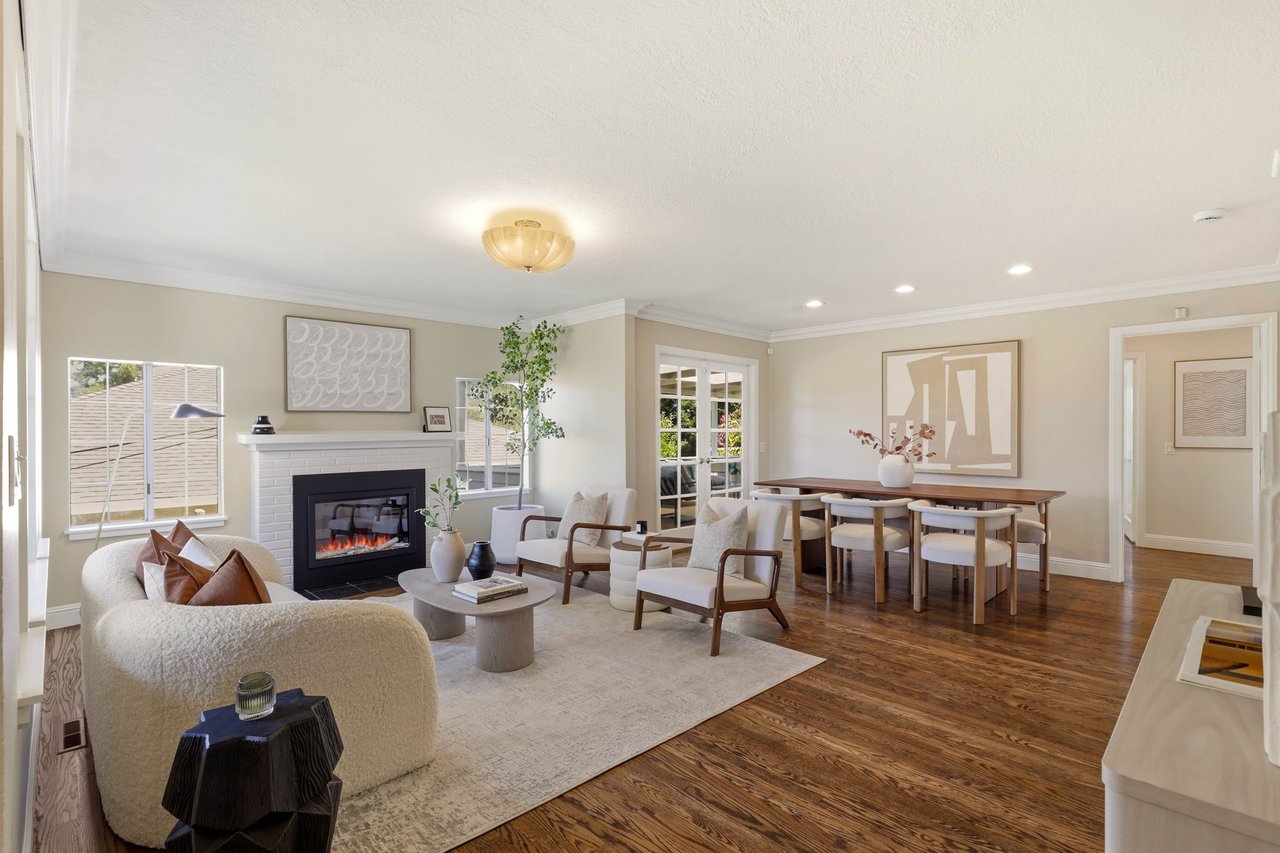
Why does professional guidance matter so much in a Bay Area estate sale?
Professional guidance in a Bay Area estate sale matters because California probate law, San Mateo County local rules, and a high-stakes market create a combination that punishes missteps and rewards preparation. With Peninsula homes regularly selling above $2 million, the difference between a well-managed estate sale and a poorly timed one can be significant, and it falls directly on the heirs.
When a family loses a loved one and inherits a Peninsula property, the last thing they need is a procedural mistake that delays the sale, triggers a re-appraisal, or forces a court hearing they weren't prepared for. That's exactly where an experienced local advisor earns their place in the process.
I've been guiding Peninsula families through estate and probate sales since 1984. The process has layers that most people don't see coming, and the stakes in today's market make getting it right more important than ever.
The Legal and Valuation Framework You Need to Understand First
Before a single showing is scheduled, California probate law sets the table. Under California State Controller's Office guidelines, most non-cash assets in a probate estate must be appraised by a court-appointed probate referee, a neutral valuation professional whose role is defined by the state. That appraisal is grounded in the property's value as of the date of death, per California Probate Code §8802, as detailed in the California State Controller's Probate Guide.
Here's what that means practically: the probate referee's number is not your list price. It's the legal baseline the court uses. Your real estate advisor's job is to work alongside that valuation, setting pricing strategy, preparing the home, and timing the marketing so the estate realizes full current market value while staying inside the rules.
Full Authority vs. Limited Authority: The I.A.E.A. Question
One of the first things I look at in any probate engagement is whether the personal representative has been granted authority under California's Independent Administration of Estates Act (I.A.E.A.). This matters enormously for how the sale unfolds.
Under the San Mateo County Superior Court Local Rules (amended July 1, 2026), estates administered under I.A.E.A. generally do not require court confirmation to sell real property. That means a more conventional listing process, faster timelines, and fewer procedural hurdles for the family.
Estates without I.A.E.A. authority are a different story. Court confirmation is required, and the local rules impose specific requirements:
- A filed appraisal or reappraisal must be on record, and if the date of death was more than one year before the sale date, a reappraisal is required.
- No bid is acceptable at the confirmation hearing without a minimum 10% earnest money deposit in cash or equivalent.
- The overbid process at the court hearing means other buyers can bid above the accepted offer, which can increase proceeds, but also adds complexity and emotional weight for the family.
Knowing which track you're on from day one shapes everything: how you price, how you qualify buyers, how you set timeline expectations, and how you prepare the family for what's ahead. This is precisely the kind of question I walk my clients through before we ever discuss list price.
Inventory, Appraisal Timing, and Why Rushing Backfires
California requires that inventory and appraisal be filed within four months of letters issuance. Because San Mateo County requires an appraisal on file for confirmed sales, listing a property before the referee's work is complete creates real risk, premature marketing can lead to delays, re-marketing, or legal setbacks that cost the estate both time and money.
I've seen families push to list quickly out of understandable urgency, only to find themselves pulling the property back off the market because the paperwork wasn't in order. A short delay at the front end almost always beats a forced pause mid-transaction.
Market Value and What's Actually at Stake on the Peninsula
The numbers in today's market make precision matter. Recent Zillow market data shows the median sale price in San Carlos at $2,560,000, with a median of 49 days on market across approximately 89 homes sold in the past 90 days. That's an area-level median, your specific property's value depends on condition, street, build year, and timing, but it illustrates the scale of what's at stake for a family managing an estate.
According to the most recent California Association of REALTORS® data, summarized through early 2026, the nine-county Bay Area median for single-family homes reached $1,285,000 in February 2026, up roughly 2.8% year-over-year. That regional figure understates Peninsula values considerably, San Mateo County consistently leads the region in pricing, but it confirms that even modest percentage differences in sale outcome translate into substantial dollars for heirs.
Here's how median sale prices and days on market compare across the Peninsula communities I serve, based on recent Zillow market data:
Area | Median Sale Price | Median Days on Market |
|---|---|---|
San Carlos | $2,560,000 | 49 |
Redwood City | $1,900,000 | 55 |
Belmont | $2,102,500 | 56 |
Menlo Park | $3,042,375 | 56 |
Half Moon Bay | $1,434,000 | 56 |
San Jose | $1,425,000 | 9 |
Woodside | $4,050,000 | 62 |
San Mateo | $1,770,000 | 48 |
Every one of those markets has its own rhythm, its own buyer pool, and its own probate nuances. A Woodside estate sale at a $4 million median looks very different from a Redwood City transaction, in preparation, in buyer qualification, and in court mechanics if confirmation is required.
The Contents Sale Is a Separate (But Connected) Process
One thing families often don't anticipate: the personal property inside the home, furniture, art, jewelry, collectibles, vehicles, has its own legal requirements in a non-I.A.E.A. probate estate. The San Mateo County Local Rules state that sales of tangible personal property ordinarily will not be approved unless the property has been appraised, often through a partial inventory or a letter appraisal from the probate referee.
This means coordinating the contents liquidation with the overall probate timeline, not treating it as a separate, informal process. High-value items (fine art, vintage vehicles, significant jewelry) may warrant independent specialty appraisers beyond the referee's scope. Getting this right protects the estate and keeps the real estate transaction on track.
Transaction Costs: What's Fixed and What's Negotiable
Peninsula estate sales involve several categories of transaction costs, and understanding which are fixed by law versus negotiable by contract matters for both planning and negotiation strategy.
San Mateo County imposes a documentary transfer tax at a statutory rate set by law, the fixed rate is a known quantity, and the San Mateo County deed records reflect how it applies. Who actually pays that tax, however, is not fixed by state law. It's typically negotiated between buyer and seller in the purchase agreement, and that allocation is one of many contractual levers an experienced advisor uses on behalf of the estate.
Other cost categories, title and escrow fees, recording fees, natural hazard disclosure reports, staging, repairs, and inspections, are largely contractual and negotiable. The goal of professional guidance isn't just to maximize the headline sale price; it's to manage costs, structure terms, and sequence the transaction so the estate nets the most it reasonably can.
If you want to know what that looks like for your specific property, that's a conversation worth having before you make any decisions. Every situation is different, and the only way to know for sure is to run through it with someone who knows this market and this process.
Frequently Asked Questions
How does a probate referee's appraisal affect what we can list my parents' San Mateo home for?
The probate referee's appraisal establishes the estate's legal valuation as of the date of death, it's the baseline the court uses, not necessarily the list price. Your real estate advisor works alongside that number to set a current market pricing strategy that reflects today's conditions while satisfying court requirements. In a confirmed sale, the accepted offer must meet or exceed a court-referenced percentage of that appraised value, so pricing strategy and the referee's number are directly connected.
Do we always need San Mateo County court approval to sell a house in probate?
Not necessarily. Under California's Independent Administration of Estates Act (I.A.E.A.), a personal representative with full authority can sell real property without court confirmation, following a process more similar to a conventional listing. Estates without I.A.E.A. authority do require court confirmation, which brings additional requirements including a filed appraisal and a 10% earnest money deposit with any bid. Reviewing the letters testamentary to determine authority level is one of the first steps in any Peninsula probate sale.
What's the difference between an estate-sale company for the contents and a Realtor for the house, do we need both?
They serve different functions and, in a non-I.A.E.A. probate estate, both are subject to court oversight. An estate-sale company handles the liquidation of personal property, furniture, art, collectibles, household goods, and must coordinate with the probate referee when high-value items need to appear in the official inventory. A real estate advisor handles the sale of the real property itself, navigating valuation, marketing, offer review, and court mechanics. The two processes need to be sequenced carefully so the contents are cleared before showings begin and neither process triggers a compliance problem for the other.
How does the San Mateo County transfer tax work in an estate sale, and can we negotiate who pays it?
San Mateo County imposes a documentary transfer tax at a fixed statutory rate applied to the purchase price. The rate itself is set by law and isn't negotiable. Who pays it, however, is not fixed by state law, it's typically allocated between buyer and seller in the purchase agreement and is a negotiable term. Your real estate advisor and escrow officer can walk you through how that allocation is commonly handled and what makes sense for your specific transaction.
When should we bring in a Bay Area estate-sale professional during probate, before or after the probate referee finishes their appraisal?
Bring in your real estate advisor early, ideally as soon as letters testamentary or letters of administration are issued, and well before the referee completes the appraisal. An experienced advisor can help you understand the timeline, coordinate with the estate attorney, assess the property's condition, and plan any preparation work so you're ready to list the moment the legal pieces are in place. Waiting until after the appraisal is done often means losing weeks of preparation time in a market where timing matters.
Navigating a Peninsula estate sale means managing legal compliance, valuation timing, court mechanics, and market strategy simultaneously, and with properties regularly trading above $2 million, the margin for error is low. The right advisor doesn't just list the home; they coordinate the entire process from the moment you have authority to act.
With more than 40 years of Peninsula experience, over 3,100 homes sold, and a practice built specifically around estate, trust, and probate sales, I've helped Bay Area families move through this process with clarity and confidence, even in the most complicated situations. I'm also the author of The Unexpected Sale: Guidance for the Executor/Administrator of an Estate, written for exactly the families who find themselves in this position.
If you're an executor, administrator, or trustee managing a Peninsula property, call me at 650-595-5500 for a confidential, no-pressure conversation. There's no obligation, just honest guidance from someone who's done this hundreds of times. Reach out here to get started.
Equal Housing Opportunity. Alex Lehr, CA DRE# 00867442, Guide Real Estate CA. This article is general information only and does not constitute legal, tax, or financial advice, confirm your specific situation with your attorney, tax advisor, lender, or escrow officer. Licensed by the California Department of Real Estate.