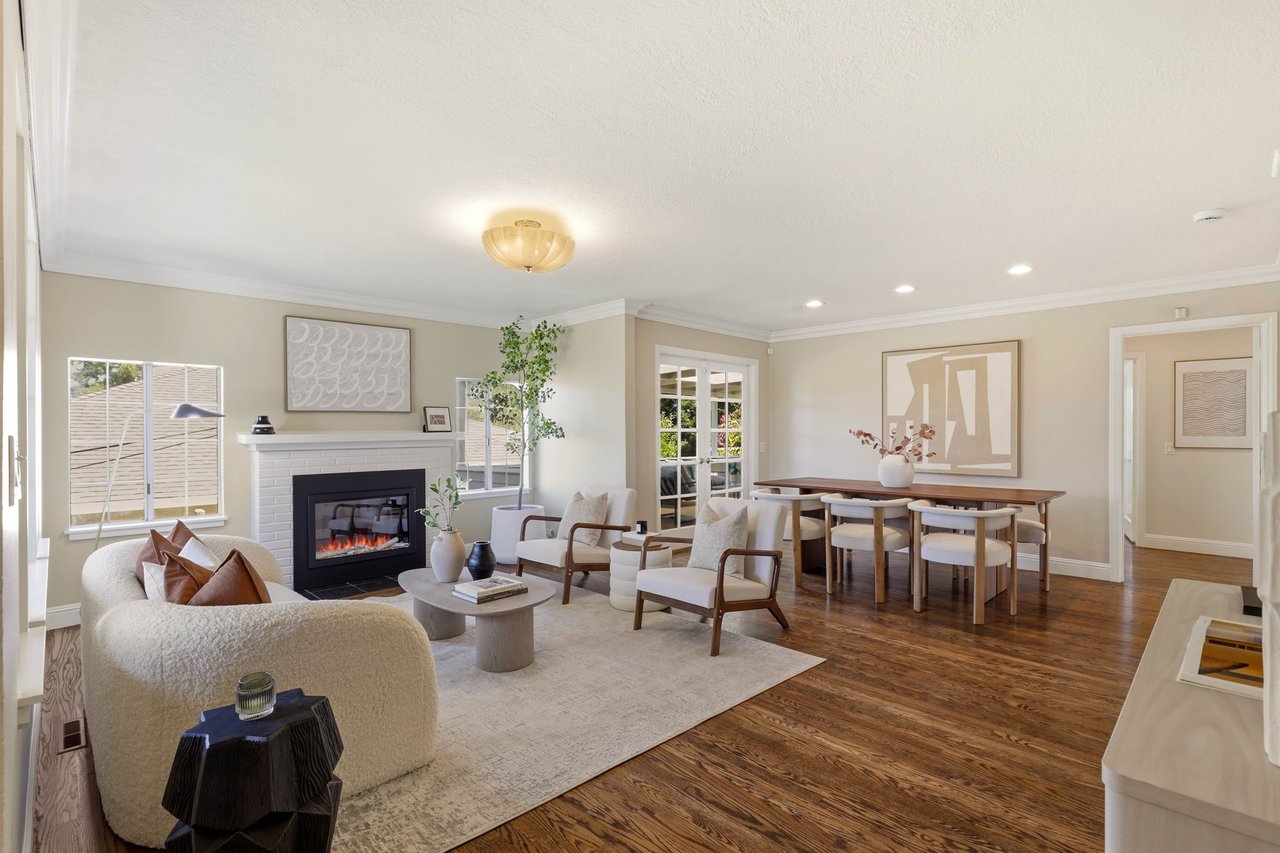
Should you renovate before selling your San Francisco Bay Area home?
Light cosmetic updates, fresh paint, refinished hardwood floors, and bathroom facelifts, tend to pay off well in the Bay Area because they reduce buyers' perceived "project load" without the cost and timeline risk of a full remodel. Major gut jobs, by contrast, rarely return their full investment at resale, and in a market where buyers often want to choose their own finishes, expensive design-driven renovations can actually work against you. The smartest pre-sale strategy separates must-do repairs from high-ROI cosmetic updates from optional heavy renovations, and treats each category differently.
What actually pays off: the three-tier framework
After 40-plus years of listing homes on the Peninsula, I've seen sellers leave money on the table in both directions, spending $80,000 on a kitchen remodel that buyers ignored, and also listing a home with peeling paint and worn carpet that sat for two months when a $12,000 refresh would have changed the outcome entirely. The difference usually comes down to understanding which tier a project falls into.
Tier 1: Must-do repairs (non-negotiable)
Some work isn't optional. If your home has a failing sewer lateral and you're selling in a Peninsula city that enforces a point-of-sale compliance requirement, the city won't let the transaction close until the lateral passes inspection. This is infrastructure, not cosmetics, and ignoring it is not a viable as-is strategy in those jurisdictions.
Beyond sewer laterals, must-do work typically includes anything a buyer's inspector will flag as a health or safety issue, active roof leaks, exposed wiring, inoperable HVAC. These items don't improve your price; they protect it. Leaving them unaddressed hands a buyer a negotiating club at the inspection contingency stage.
Older Peninsula and San Francisco homes, much of the housing stock here was built between the 1920s and 1950s, frequently carry unpermitted additions, finished attics, or in-law units that were never pulled through the building department. That's a disclosure issue, not necessarily a repair issue, but it's something I walk every seller through before we decide whether to clean up permits or simply price and disclose accordingly.
Tier 2: High-ROI cosmetic updates (usually worth doing)
This is where the real leverage is. The most recent national data available, the NAR and NARI Remodeling Impact Report, updated April 2025, consistently shows that light cosmetic projects carry higher cost-recovery percentages than heavy remodels. Interior painting and refinishing hardwood floors are the classic examples: relatively low cost, high visual impact, and buyers respond to them immediately.
For Peninsula homes specifically, the projects I see produce the clearest payoff are:
- Interior repainting in neutral, light palettes. Older Bay Area homes often have smaller rooms and lower natural light. Fresh, bright paint makes a disproportionate difference in how a home photographs and shows.
- Refinishing or replacing flooring. Worn carpet is one of the first things buyers mentally price into a discount. Refinishing existing hardwood in a 1940s home or replacing carpet with engineered wood changes the feel of the entire house.
- Bathroom facelifts, not gut jobs. Re-caulking, re-glazing a tub, swapping a vanity, updating fixtures and lighting. You're spending a fraction of a full remodel and removing the most visible signs of age without touching plumbing.
- Landscaping and curb appeal. First impressions set the price anchor before a buyer walks through the door.
- Staging. Thoughtful staging consistently drives more competitive offers than almost any physical update you can make to a home at comparable cost, and it's reversible.
The 2022 NAR/NARI Remodeling Impact Report (still the most widely cited edition through 2025) found that for some interior cosmetic projects, cost recovery at resale ran higher than for major design-driven remodels. That pattern holds in the Bay Area, where buyers at the $1.4M–$4M price points these markets command have strong opinions about finishes and frequently want to customize major spaces themselves.
Tier 3: Heavy renovations (usually high risk before a sale)
Full kitchen gut jobs and complete bathroom remodels are the projects sellers most often ask me about, and the ones I most often counsel caution on as pre-sale investments.
The same NAR Remodeling Impact data shows that for a major kitchen remodel, REALTORS® estimated cost recovery at roughly two-thirds to three-quarters of the project's cost, meaning you're likely spending more than you're getting back. And that's the national average; in a market where your buyer may be a tech executive who plans to gut the kitchen to their own spec anyway, the recovery can be even lower.
There's also the timeline problem. In San Francisco, permits for structural changes or major kitchen and bath work can take multiple weeks to months for approval and inspections. On the Peninsula, timelines vary by city, but any project involving structural work, exterior changes, or full gut jobs will take longer than sellers typically expect. That holding time, mortgage payments, property taxes, insurance, adds real cost that doesn't show up in the contractor's bid.
The honest answer: if your kitchen is genuinely dysfunctional or the home is priced at a level where buyers expect turnkey, a targeted update may make sense. But that calculation is specific to your home, your price point, and your timeline. It's not a universal rule, and it's exactly the kind of analysis I run through with sellers before we decide on a prep strategy.
As-is versus light updating: how to decide
Selling as-is isn't the same as selling neglected. It means pricing to reflect condition and letting the buyer take on the work. In the right situation, an estate sale, a home with significant deferred maintenance across multiple systems, or a property where the lot value dominates, as-is can be the cleanest and most financially sound path.
But "as-is" with a home that just needs paint and floors is a different story. You're essentially offering buyers a discount to do work that would cost them more than it would cost you, because sellers with established contractor relationships and no emotional attachment to the outcome can execute pre-sale prep efficiently. That's a real dollar difference at closing.
Here's a quick look at current market conditions across the Peninsula, based on recent Zillow market data (trailing roughly 90 days, as of August 2026). These are area-level medians, individual home values vary by condition, street, build year, and timing.
Area | Median Sale Price | Median Days on Market |
|---|---|---|
San Carlos | $2,560,000 | 49 |
Redwood City | $1,900,000 | 55 |
Belmont | $2,102,500 | 56 |
Menlo Park | $3,042,375 | 56 |
Half Moon Bay | $1,434,000 | 56 |
San Jose | $1,435,000 | 8 |
Woodside | $4,050,000 | 55 |
San Mateo | $1,770,000 | 48 |
At these price points, even a modest condition premium, the difference between a home that shows well and one that doesn't, can translate to a six-figure difference in final sale price. That's the math that drives the as-is versus update decision, and it's different for a $1.4M Half Moon Bay home than for a $3M Menlo Park property.
One thing I always tell sellers: the decision isn't just about ROI on the renovation itself. It's about which version of your home attracts the most competitive offer pool. A home that photographs beautifully, shows cleanly, and requires no obvious immediate work draws more buyers, and more buyers means more competition, which is what produces the best price in this market.
A note on transfer tax and net proceeds
One detail worth understanding: in San Francisco, the real property transfer tax is tiered and calculated on the final sale price. Per SF.gov's transfer tax guidance, the obligation is governed by local ordinance and can be negotiated in the purchase contract. A 2026 legislative update (File #260178) halved the transfer tax rate for transfers on or after July 1, 2026 on properties with consideration of $10 million or more, reducing the highest brackets meaningfully. In San Mateo County, the documentary transfer tax rate is a flat county rate per the county's deed records guidance, separate from any city-level additions.
The practical point: a renovation that lifts your sale price also slightly increases your transfer tax, but when the ROI is strong, the net effect still favors the update. Transfer tax alone shouldn't drive the renovation decision, but it's one of the variables that belongs in your net-proceeds calculation. I'll walk you through the full picture when we talk.
Frequently asked questions
Is it worth doing a kitchen remodel before selling my Peninsula home, or should I just update surfaces?
In most cases, surface updates, new cabinet hardware, fresh paint, updated lighting, and countertop resurfacing if the existing material is dated, deliver better cost recovery than a full gut remodel. National data from the NAR/NARI Remodeling Impact Report shows major kitchen remodels typically recover roughly two-thirds to three-quarters of their cost at resale. Bay Area buyers at the $2M–$4M price point frequently prefer to customize major spaces themselves, which means a full remodel you paid for may not get credited in full. The exception is a kitchen that is genuinely dysfunctional, think missing appliances, failing cabinets, or a layout that photographs as a liability.
Which pre-sale projects give the best return in the Bay Area, painting, flooring, or a full bathroom remodel?
Interior painting and floor refinishing consistently produce the highest cost-recovery ratios among pre-sale projects, according to NAR's Remodeling Impact research. A bathroom facelift, re-caulking, re-glazing, new fixtures and vanity, sits in the middle: meaningful visual impact without the cost or timeline of moving plumbing. A full bathroom gut job, like a full kitchen remodel, carries more risk of not recovering its cost, especially when the buyer may want to choose their own tile and fixtures anyway.
Do I have to fix everything that comes up on the inspection if I sell my Bay Area home as-is?
Not necessarily, but selling as-is doesn't exempt you from California's disclosure requirements. You're still required to disclose known material defects. What changes is the negotiating dynamic: buyers who purchase as-is typically price the condition into their offer, and you've set expectations accordingly. The one exception is local ordinance-driven compliance items. In some Peninsula cities, a failing sewer lateral must be repaired or replaced before the city will allow the transaction to close, regardless of how the sale is structured.
How do sewer lateral rules in San Mateo County cities affect what I need to repair before selling?
Several Peninsula cities enforce point-of-sale sewer lateral compliance requirements, meaning the lateral must pass inspection before the transaction can close. If your home is in one of those jurisdictions and the lateral fails, you'll need to repair or replace it, this isn't something you can negotiate around with an as-is sale. The scope and cost vary depending on the lateral's age, material, and condition. I recommend ordering a sewer scope inspection early in the prep process so there are no surprises at escrow.
What's the difference between selling as-is versus doing light updates and staging?
Selling as-is means pricing to reflect current condition and letting buyers take on the work themselves, it's a legitimate strategy for estate sales, heavily deferred properties, or situations where the lot value is the primary driver. Light updates plus staging, by contrast, are designed to expand your buyer pool and reduce the mental discount buyers apply to visible wear. At Peninsula price points, that difference in buyer competition can translate to a meaningful gap in final sale price. The right path depends on your home's specific condition, your timeline, and how much prep work is realistically achievable before listing.
The bottom line
Pre-sale renovation on the Peninsula isn't a single decision, it's a triage process. Handle the must-do repairs so they don't become negotiating leverage against you. Invest in the light cosmetic updates that reduce buyer hesitation and expand your offer pool. Be skeptical of full gut jobs unless the specific numbers for your home and price point justify them. And factor in timeline: San Francisco and Peninsula permitting for heavy work can push your listing date back further than the project is worth.
Every home is different, and the right prep strategy for a 1940s San Carlos ranch is not the same as for a 1990s Redwood City townhome. With more than 40 years of listing homes on this Peninsula and more than 3,100 transactions behind me, I've developed a clear-eyed process for working through exactly these decisions with sellers, including the estate and trust sales where the family needs a clean, low-stress path to close. If you're weighing what to do before you list, call me at 650-595-5500 for a no-pressure conversation. I'll give you a straight answer. Reach out here and we'll start with a walkthrough.
Equal Housing Opportunity. Alex Lehr, CA DRE# 00867442, Guide Real Estate CA. This article is general information only and does not constitute legal, tax, or financial advice. Consult your attorney, tax advisor, lender, or escrow officer to confirm figures and requirements specific to your transaction. Message and data rates may apply.